Posted by Randy Pucher on Fri, Dec 16, 2011
Pucher’s Decorating Centers Earn Coveted Angie’s List Super Service Award
Award reflects businesses’ consistently high level of customer service
Pucher’s has been awarded the prestigious 2011 Angie’s List Super Service Award, an honor bestowed annually on approximately 5 percent of all the businesses rated on the nation’s leading provider of consumer reviews on local service and health providers.
“My grandfather started this business in 1928 and he always taught me that providing people with quality products and great service is the most important thing in business. The amazing staff at our three stores - Berea, N. Royalton & Westlake - live this philosophy every day and it shows in the way we treat our customers from the moment they walk in the door,” said owner Randy Pucher. (To see what our customers are saying about Pucher's, see our Customer Reviews.)
“Only a fraction of the businesses rated on Angie’s List can claim the sterling service record of being a Super Service Award winner because we set a high bar,” said Angie’s List Founder Angie Hicks. “The fact that Pucher’s can claim Super Service Award status speaks volumes about its dedication to consumers.”
Angie’s List Super Service Award winners have met strict eligibility requirements including earning a minimum number of reports, an exemplary rating from their clients and abiding by Angie’s List operational guidelines.
Ratings are updated daily on Angie’s List, but members can find the 2011 Super Service Award logo next to business names in search results on AngiesList.com.
Angie’s List collects consumer reviews on local contractors and doctors in more than 500 service categories. Currently, more than 2 million consumers across the U.S. rely on Angie’s List to help them make the best hiring decisions. Members get unlimited access to local ratings via Internet or phone, exclusive discounts, the Angie’s List magazine and help from the Angie’s List complaint resolution service. Take a quick tour of Angie’s List and view the latest Angie’s List news.
Posted by Laura Prestien on Fri, Nov 04, 2011
Trend #4 - Go Cordless!
There are a number of reasons why cordless blinds and shades are becoming more popular. From an aesthetic viewpoint, cordless blinds lend a cleaner, more streamlined look to your windows. Many people simply don't like the look of cords hanging from their windows. Cordless blinds can also be easier to operate. Is there anyone reading this who hasn't struggled with cord pulls trying to get their blinds to hang just right? More importantly, cords present a safety issue for homes with infants and young children. That's why the Window Covering Safety Council is recommending cordless blinds and shades in any room where young children sleep and play. We invite you to visit www.windowcoverings.org for more information. They also offer free retro-fit kits to modify the cords on your existing blinds and shades to make them safer. Luckily, many of the most popular window treatments are now available in cordless options including Roman and roller shades, cellular and pleated shades, aluminum blinds and even wood blinds.
Trend #5 - Motorization (Go High-Tech!)
For the ultimate in ease and convenience, check out the motorized options for window treatments. Today, almost any blind or shade can be operated (lifted up and down and tilted open and closed) with the press of a button. This option is perfect for those hard-to-reach windows, for children's rooms and for anyone who loves high-tech options!
Key Takeaway: You don't have to struggle with lift cords anymore. When shopping for window treatments, ask about cordless and motorized options! They are safer and easier to operate and lend a more streamlined appearance to your windows.
Posted by Randy Pucher on Thu, Oct 27, 2011
Trend #2 - Color
As homeowners become more color-confident, we’re seeing a move toward bolder and warmer tones in blinds and shades. The overall palette is still soft, but mid-tone colors like purples, orange and red hues are popping up in the new collections. Here is a great example of how to use color on your windows. We love how these golden sheer horizontal blinds play off the warm wood tones and add a warm ambiance to this bathroom (HD Silhouette Window Shadings in Parisian Summer from the Matisse Collection).

Notice what happens when you add a little color and texture to simple roller shades. The Comfortex Serenade roller shades in eggplant (pictured below) add instant drama to this kitchen. To try this in your own home, simply choose a hue that compliments your room’s overall color scheme. The design consultants at Pucher’s can help you pick the right color and then help you find the perfect window treatment!
Trend#3 - Pattern
If you want your window treatments to make a statement, check out the new patterned blinds and shades. Roller shades, roman shades and now cellular shades are available in patterns ranging from scrolls, florals, textured looks, designer-inspired silhouettes, polka dots as well as accent borders. The Comfortex Persona collection allows you custom design your own window treatments! You can choose from the patterns and colors in their design library or submit your own photo, graphic or design and they will print it on your blinds and shades.
The Comfortex Persona collection is ideal for kids and teens. They can create blinds and shades for their room with their favorite designs & colors, pics, and team logos. How cool is that?
Key Takeaway:
We're seeing blinds and shades in bolder, more saturated colors as well as patterns like scrolls, florals, stripes, textured looks and paisleys. The Comfortex Persona Collection even allows you (and your kids) to custom design your own window treatments! The design consultants at Pucher's would love to show you all the great design options.
Posted by Randy Pucher on Fri, Oct 21, 2011
Trend#1 - Texture
This season we are seeing lots of interesting textures in all sorts of window treatments - from wood and vertical blinds to fabric shades, even aluminum blinds! We think this really adds style points to window treatments. Let's face it - most people choose neutral colors for their blinds and shades because they want them to coordinate with other furnishings in their home. It's very practical, but also kind of boring, right? Adding texture to neutrals is a great way to add visual interest and style to your windows.
This season, everything from wood blinds to vertical blinds, roman to roller shades are getting a makeover with textures like grasscloth, raw silk, distressed wood finishes & woven wood looks, and shimmery metallics. Let's take a look at this season's standouts:

Hunter Douglas Silhouette Sheer Window Coverings in Chateau
These light-diffusing horizontal sheer blinds are shown in Chateau, a fabric that mimics raw silk. The vanes are available in 2", 3" , and 4" to complement any size window, even specialty shaped windows. In addition to adding texture, color, and style to your interiors, they do a beautiful job filtering daylight and also block 99% of UV light, protecting your floors and furnishings.
Graber Traditions 2" Wood Blinds in Barnwood

Distressed finishes, like the Windswept Barnwood pictured here, add a weathered look and natural texture to traditional wood blinds. We really like Graber's Elite Woods & Unique Finishes Collection which features whitewashed and hand-glazed wood looks, as well as natural hardwoods and bamboo. Graber also lets you custom match your wood blinds to any paint or stain color!
Hunter Douglas Natural Elements Metallic Blinds
I know you're thinking, "Aluminum blinds - really?" The new Natural Elements collection made us take another look at metallic blinds. This collection features riverstone looks, sophisticated brushed matte finishes and shimmery, fashionable metallic finishes in Bronze, Nickel and Copper that will highlight any decor. Made of a special spring-tempered alloy, these blinds have superior resiliency and are extremely durable. They are also made from 95% recycled aluminum, making them an eco-friendly choice. Natural Elements will add a lot of style to your home for the money - a great value!
Key Takeaway:
This season, we're seeing all sorts of textures in blinds & shades which add great style and fashion to your windows. Stop in to Pucher's to see the latest fabric, wood, even metallic looks in blinds and shades.
Posted by Randy Pucher on Fri, Oct 14, 2011

Due to the wet weather we have had in NE Ohio in recent years, many homeowners (including us) have run into problems with flooding (usually basements). It seems like this year has been particularly bad. In fact, our Berea store flooded this summer for the first time due to the unusually heavy storms we had. We can't control the weather, but let's look at some practical flooring options that can help homeowners who live in a flood-prone area.
Carpet
Carpeting is a popular choice for basements because it is so warm & insulating and makes your basement areas more liveable. But carpeting can be a real challenge after a flood. The good news is that it can be saved , IF you act quickly! The problem is actually the carpet pad, which absorbs a lot of water. Water underneath the carpet creates the perfect breeding ground for mold. Once mold develops, it's over. So, your best move is to call professional cleaners ASAP (but no later than 24 hours). They have powerful equipment that can quickly extract water, remove the carpet pad and dry the carpet ASAP.
However, if your carpet did not make it and you still want carpeting in the basement, you might consider carpet tile. It is easy to install and is very family-friendly. In case of flooding (or spills, pet accidents, etc.), simply remove the affected tiles, have them cleaned and re-install them. The great news is carpet tile is becoming more popular today and is available in a variety of styles & colors. It's not just for offices anymore!
Wood & Laminate Flooring
We wish we had better news for you here. Because they are porous, wood & laminate floors are often permanently damaged in the event of flooding. Engineered wood & laminate flooring CAN be used in basements because they are less dense and more moisture-resistant than solid wood. However, we would not suggest installing these floors in your basement if you live in an area that is flood-prone.
Ceramic & Porcelain Tile
No problem here. Because they are made of stone, these tiles only absorb about 1-2% of standing water, making them one of the most waterproof floors available. Plus, they are fantastic solutions in southern climates because they keep homes nice and cool. If you live up north like we do, you might consider installing radiant heating underneath the tiles; or you can try...
Luxury Vinyl Tile (LVT)
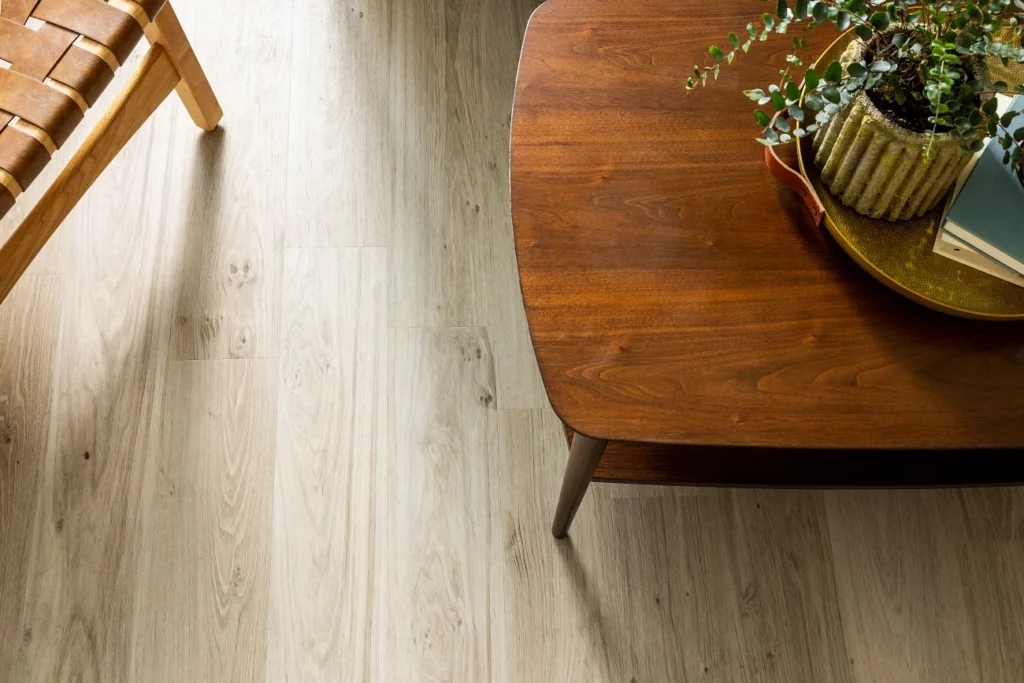
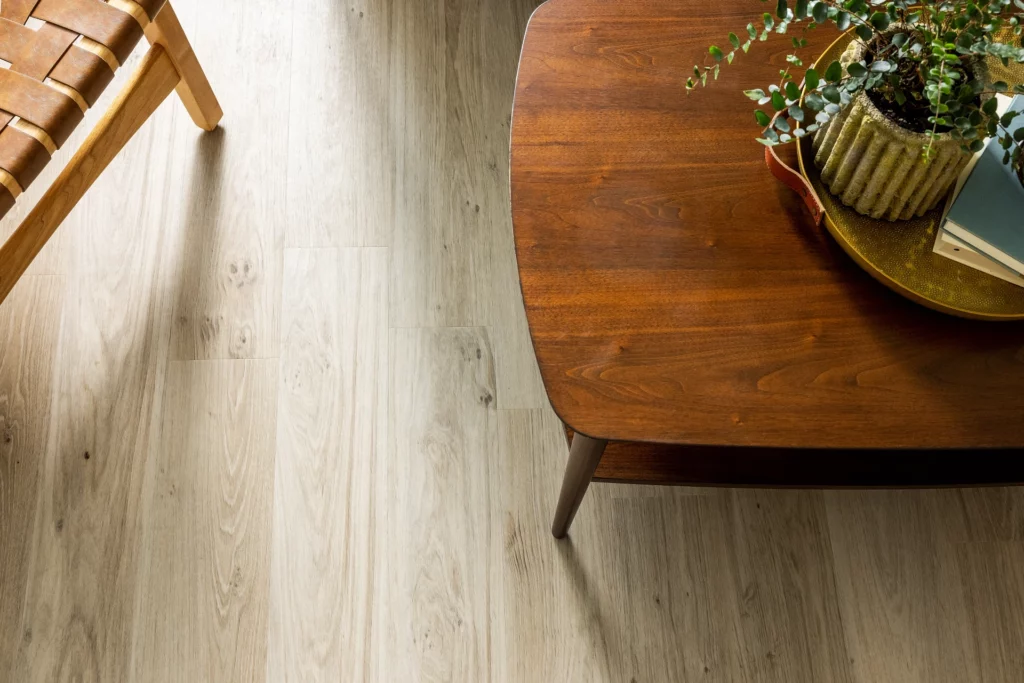
This product is one of our favorites and is especially good in any area where moisture is a concern. They are waterproof (if installed with waterproof adhesive) and can handle standing water for a limited time. If any of the tiles are damaged, simply cut the damaged tiles out and replace them with spares. Plus, LVT is extremely durable, easy to clean and warmer and softer underfoot than ceramic. If that weren't enough, LVT tiles are gorgeous and available in a variety of realistic wood and stone looks (check out Mannington Adura, pictured above).
Key Takeaway:
Coming home to a flooded basement is no fun (we know). Homeowners can mitigate the damage, cost and stress by choosing flooring that is not only durable and low-maintenance, but water-resistant and easy to replace.
Posted by Randy Pucher on Thu, Aug 25, 2011
I have been in the paint business for over 50 years - I know that makes me sound ancient! (I started working in my dad's store when I was 7.) My family has been in the paint business for over 80 years. My point is that if you live in the Cleveland area and your last name is Pucher, you probably know a thing or two about paint. So I thought I would address a common question we get asked by customers - when should you use oil vs. latex paint?
Oil (Alkyd) Paints at a Glance

Oil paints are known for their smooth-as-glass, hard enamel finish. In the past, this has made them a popular choice for cabinets and woodwork. In fact, we know contractors who still insist on using only oil paint for woodwork. However, there are some significant downsides. Oil paints contain a lot of VOCs (volatile organic compounds) which off-gas as the paint dries, into your home and the atmosphere - not ideal for your family or the environment. So in 2008, the Ohio EPA set a max of 100 VOCs per gallon. This legislation has limited the types of oil paint available to oil primers (in gallons & quarts) and satin & semi-gloss oil finishes (quarts only). I recommend oil paints only for the following specific applications:
1. Stained Walls - Oil primers, such as Benjamin Moore's Enamel Underbody, are the only primers guaranteed to seal water and tobacco stains (interior walls)and tannin bleeding (exterior surfaces).
2. Existing Oil Paint - You can always use oil primers over existing oil paint, but keep in mind there are now acrylic primers that have excellent adhesion and can be applied on any oil painted surface (try Benjamin Moore's Fresh Start 100% Acrylic Superior Primer).
3. Touch Ups/ Small Paint Projects - Because oil finishes are only available in quarts, it makes sense to use these only for touching up existing oil painted surfaces or for small painting projects like furniture.
Latex (Acrylic) Paints at a Glance

Clearly, acrylic or latex paints are the way to go for most paint projects. Latex paints are much easier, safer and cheaper for homeowners to use. They have longer film life and better color retention (as long as you buy a good quality paint). The only downside is that it may take more prep work to achieve a smooth finish. But, in time, latex technology may close that gap as well.
Key Takeaway: Because of their high VOCs & recent EPA regulations, oil paints are being phased out and really can only be used for specific applications. We recommend acrylic or latex paints for most paint projects. To save $5 per gallon on Benjamin Moore paints, just print this online coupon.
Posted by Randy Pucher on Thu, Aug 18, 2011
We have always known that color affects our mood. A room painted in a beautiful turquoise can evoke the relaxed feelings you get from being near the sea. Just thinking about the vibrant colors of Mexico – papaya, marigold, terra cotta, lapis lazuli, parrot green - can perk you right up on a dull, gray winter day.
There is a new science called Chromotherapy that looks at how color can adjust body vibrations to frequencies that result in health and harmony. Humans need sunlight to live. The sun’s light is broken into seven distinct rays (colors), all necessary for health. The energy of these colors is like the electromagnetic energy of radio and television waves. Just like the transmitters and receptors of radio waves, humans are receiving and transmitting energy in the same way. It appears we can emit the energy of a certain color by simply thinking about it. Each color possesses frequencies of a specific vibration, and each vibration has characteristics related to different physical symptoms.
RED
- Activates the circulatory and nervous systems, improving impotence, poor circulation, and shock.
- Helps bladder infections, colds, back pain, trouble with the legs or feet, and low blood pressure.
- Wear or surround yourself with red if you feel ungrounded, depressed, or lack energy.
- Try Benjamin Moore Vermilion 2002-10.
ORANGE
- Helps address asthma and bronchitis.
- Works on allergies, skin problems, constipation, spasms, cramps, and kidney problems.
- Can also improve lactation for nursing mothers with milk supply issues.
- Use orange if you feel repressed or inhibited in any way, or you lack sufficient energy.
- Try Autumn Orange 2156-10.
YELLOW
- Good for breathing problems, exhaustion, liver problems, gallstones, muscle cramps, diabetes, hypoglycemia, and hypothyroidism.
- Improves food allergies, gas, and digestive disorders.
- Beneficial in building strong bones as well.
- Use yellow for depression, nervous disorders, and dispelling fears.
- Try Concord Ivory HC-12.
GREEN
- Acts as a nerve relaxant.
- Used for heart and lung problems, high blood pressure, breathing difficulty, compromised immune system, and fatigue.
- Works to harmonize all levels of being, improve loneliness, reduce negativity and tension, soothe the nerves and spirit, and reduce anger and paranoia.
- Promotes emotional stability, calms fear of death, and prevents insomnia.
- Try Kiwi 544.
BLUE
- Blue lubricates joints & articulations.
- Helps address infections, stress and nervous tension.
- Blue stimulates muscle and skin cells, nerves and the circulatory system.
- Use blue as color therapy if you have a sore throat, fever, ear infection, inflammation, burn, or other skin irritation.
- Eases physical tiredness, mental exhaustion, and violent or hyperactive behavior.
- Try Utah Sky 2065-40.
INDIGO
- Indigo helps address eye inflammation, cataracts, glaucoma, ocular fatigue and nasal bleeds.
- Soothes diarrhea, intestinal irritation, infections in the ears, eyes, or nose, and pain of any kind.
- On emotional and mental levels, indigo promotes inspiration, reduces psychic exhaustion, and releases negative thought and behavior patterns.
- Try Midnight Navy 2067-10.
VIOLET
- Violet relaxes the nerves and lymphatic system.
- Addresses inflammation, urinary illness, depression, migraines, baldness, dandruff, and neurotic behavior.
- Should be used instead of red for high-strung people.
- Try Gentle Violet 2071-20.
So the next time you find yourself really attracted to a color, there may be more to it than you think. Your favorite colors may help you feel better in more ways than one! For more ideas about using color in your home check out Benjamin Moore’s Color Gallery. Another way to safeguard your health is to use eco-friendly paints like Benjamin Moore's Aura, Regal and Ben. These paints are all low VOC and low odor, so you can get those paint projects done without inhaling a bunch of paint fumes.
Key Takeaway: Who knew? Color may literally help you feel better! The science of Chromotherapy looks at how your favorite colors can contribute to health and harmony. Plus get some great color ideas from Benjamin Moore.
Posted by Randy Pucher on Fri, Aug 12, 2011
Mirage - the # 1 hardwood flooring brand in North America
One look at a Mirage hardwood floor and it may ruin other flooring for you. They're that beautiful! That's how we felt when we first saw these floors. If you want a floor that is truly distinctive, one you won't see everywhere, you really should make a trip to Pucher's Westlake to see our new Mirage display. Mirage wood floors are known for uniformity, stability, durability, better air quality, added value, and lifelong good looks.
Mirage has been recognized 15 times for outstanding quality, including the following:
- Ranked 1st in quality by Floor Focus magazine in 2003, 2005, 2006, 2007, 2008, 2009, and 2010
- Ranked 1st in quality by Floor Covering Weekly in 2008, 2009, and 2010
- Received the Floor Covering News Award of Excellence in 2007, 2008, 2009, and 2011
Top 10 Reasons to Choose Mirage
To experience Mirage hardwood floors for yourself, watch this video Top 10 Reasons to Choose Mirage and take a guided tour through rooms that show off Mirage's gorgeous oaks, maple, walnut, birch and exotic hardwoods floors. We think you'll agree each floor is more gorgeous than the next.
One reason that Mirage floors are so distinctive is the cutting method that the company uses in producing its engineered wood planks. Most hardwood floors are crafted using a rotary cut, but Mirage uses the dry sawn method. The dry sawn method preserves the color variation, uniformity and natural grain beauty of the wood. You'll notice the difference when you see these floors.

One More Reason We Like Mirage
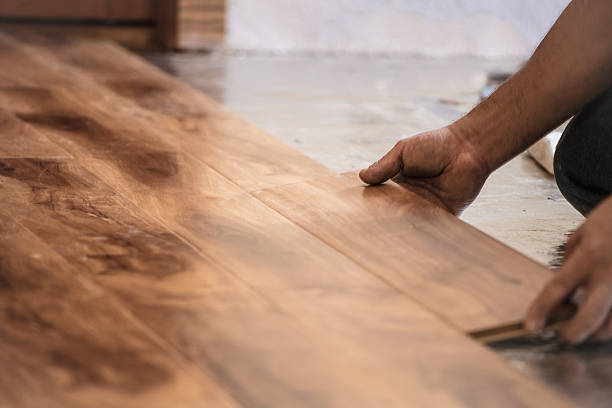
Mirage features beautiful exotic hardwoods like African Mahogany, Koubari and Canadian Breza (pictured, top) and they are all Lacey Act compliant. You probably have never heard of the Lacey Act, but it definitely affects you when you buy exotic hardwood flooring. Enacted to protect our natural rainforests, the Lacey Act Amendment of 2008 bans the import, sale and purchase of illegally sourced timber and wood products. I think we can all agree that protecting the rainforest is a good thing. But, if you're shopping for an exotic hardwood floor, the burden is on you, the buyer, (as well as us, the seller) to make sure that the hardwood you buy was sourced from a company that practices responsible and sustainable logging. According to the law, even an innocent buyer unaware of any illegal sourcing, can be subject to imprisonment, civil and criminal fines up to $200,000 and forfeiture of goods, if they purchase such a floor. This is why Pucher's only carries products that are Lacey Act compliant, like Mirage hardwoods.
Key Takeaway: NEW at Pucher's Decorating, Mirage Hardwood floors offer stunningly beautiful, quality hardwood flooring constructed of sustainable N. American and exotic hardwoods that will last a lifetime. Visit us at Pucher's Westlake or watch this video to learn more about Mirage.
Posted by Randy Pucher on Fri, Jul 29, 2011
When shopping for carpet, a lot of people naturally focus on carpet fiber and often assume that nylon is always better than polyester. However, carpet fiber is only one of the factors that you need to consider. Equally important are carpet construction factors like density, filament type and twist level. All of these elements together determine how a carpet will perform and what it will cost. When shopping for carpet, it helps to have a general understanding of these factors in order to make the best decision. In this week’s post, we’ll look the difference between fibers and next week we’ll talk about carpet construction.
Carpet Fiber: Carpet’s Basic Ingredient
The four basic fibers used in carpet today are nylon, polypropylene (Olefin), polyester and wool. Since synthetic fibers make up 99% of the fiber in the US carpet industry, we’ll focus on them. Each type of fiber has its strengths and weaknesses which determine how it can be used and constructed. Keep in mind there is no perfect fiber and carpet is a fabric that is subjected to incredible abuse – foot traffic, accidental spills and environmental contaminants.
Nylon
Durable, Resilient & Versatile
Nylon is more expensive than other synthetic carpet fibers and is the most commonly used carpet fiber today. Nylon is the most versatile of all fibers, providing flexibility in creating a variety of carpet styles – from sumptuous plush to fashion-forward patterns to low-maintenance loop (Berber). Its strengths include good resiliency, good yarn memory to hold twist, good stain resistance with stain treatment applied, good soil hiding ability, and good abrasion resistance. It is the strongest fiber, making it an excellent choice for heavy traffic areas, active households or commercial facilities.
Be aware that there can be considerable cost differences even between two similar-looking nylon products. Nylon, for example, may be branded or unbranded and, as we mentioned, carpet construction greatly influences value, price and performance. You really can’t judge a carpet by appearance or fiber weight alone. As an example, Shaw’s Anso nylon is a branded, premium nylon and comes with some of the strongest warranties in the industry, including Lifetime Stain and Soil Resistance (even pet urine stains!). Anso nylon carpets cost more, but you’re getting a premium nylon with excellent construction properties and the warranties reflect this. What you care about is that your carpet will look newer longer.
If you are looking for value goods, unbranded nylons offer a considerable benefit for the money. These products may have fewer features and less robust warranties, but you’ll still get the inherent benefits of nylon (durability and resiliency) at a lower price.
Polypropylene (Olefin)
Color Fast, Naturally Stain Resistant, Economical
Olefin is one of the most colorfast fibers on the market. Unlike the other fiber types, polypropylene will not absorb water and must be solution dyed to impart color. Solution dyeing is a pigmentation process in which color is actually built into the fiber when it is formed, thereby becoming an inherent part of the fiber. The color will not fade, even when exposed to intense sunlight, bleaches, or other harsh chemicals. However, since it is not as resilient as other fibers, polypropylene is better suited to low-profile loop (Berber) carpets in which there is less need for superior resiliency. The one exception to this is a type of olefin called "Comfortouch" by Shaw. This new fiber is softer to the feel because it is scoured three times during production. Then the fiber is treated with Shaw’s R2X, a patented Stain and Soil inhibitor for enhanced protection against spills and tracked-in dirt. The result is a fiber that feels like cotton, resists soil and stains, and wears better than other olefin carpet.
Olefin carpets work well anywhere you need fade and stain resistance – in rooms with strong sunlight, indoor/outdoor rooms, kitchens, children’s bedrooms & playrooms, and basements.
Polyester
Exceptionally Stain & Fade-Resistant, Soft, & Budget-Friendly
If you need stain-resistance, this is your carpet! Just to give you an example, we know a customer who spilled hair dye on her 6 month old polyester carpet. Although hair dye is on the list of stains that are NOT warranted, this customer got the stain out with laundry detergent and water. Now that’s impressive!
While not as inherently resilient as nylon, polyester carpets will perform well if constructed well. So choose a polyester carpet with a higher pile and medium-high density to ensure maximum appearance retention and long-term wear. You can also refer to the durability ratings on the back of carpet samples to help you assess how a carpet will stand up to traffic.
If you’ve never considered polyester carpeting before, you might want to look at Shaw’s New ClearTouch carpets which are made of a new type of polyester called PET (Polyethylene Terephthalate). This new polyester "ups the ante" in terms of performance. ClearTouch carpets feature:
- exceptional softness
- natural and permanent stain resistance, including pet urine stains
- improved strength and better abrasion resistance
- excellent appearance retention and long-term wear
- 25% recycled content from recycled soda and water bottles
The new PET polyester carpets pack in a lot of performance for the money! They are a great choice for children’s bedrooms & playrooms as well as for people who don’t want to put a lot money into their carpet. We highly recommend you choose a PET polyester with a higher pile and medium-high density to ensure maximum appearance retention and long-term wear.
Key Takeaway: The type of carpet fiber you want really depends on your priorities and needs. A family room and hallway in an active household may require a better-grade nylon carpet. Some people simply like the peace of mind that nylon’s strong warranties provide. Rooms that are not frequently used may not need a high-performance nylon. For folks on a budget, a tightly twisted, medium dense PET polyester carpet that is multicolored to help hide traffic and soil may be all that you need. As with any large purchase, do your homework, read your warranties and be sure to communicate your needs and wants to your decorating consultant so that he or she can help you make the best choice for your home and family. Tune in next week for Part II: Carpet Construction Basics.
Posted by Randy Pucher on Tue, Jul 26, 2011

Dear Readers,
Permit us this digression from our usual postings. We loved this article published by Mitch Allen, President of Mimi Vanderhaven, a Northeast Ohio publication dedicated to supporting local businesses (Mimi Vanderhaven) and we wanted to share it.
If you, like me, are tired of:
- buying products that never live up to your expectations and break or wear out before they're even paid for
- paying for meals at chain restaurants that offer little to no nutrition
- settling for poor (or nonexistent) customer service from passionless employees
- the pathetic return on our tax dollars (whoa - now there's a whole other blog article!)
If, like me, you are more concerned about the value you're getting for your money, believe in "quality over quantity" and like to deal with service-driven companies who are passionate about what they do, then read on and enjoy!
ASKING FOR MORE
“We get what we ask for in life, and most of us ask for too little.”
by Mitch Allen
Since my brother’s death last year, plus the long, cold Northeast Ohio winter and my own bout with a lingering flu this spring, I have fundamentally changed how I approach the world. If I wake up in the morning, I find myself feeling grateful. If I wake up in the morning and I feel good, I’m downright giddy.
In the poem “Joy” by George Bilgere, he describes getting over the flu this way:
The baker has come back to his store
and everything smells like warm baguettes.
The children are playing in the schoolyard,
the piano bars along the river
have thrown open their doors.
As a result of my new appreciation for life and health, I’m eating a lot more ice cream. Several times each week you’ll find me at Strickland’s, Country Maid, or East Coast Frozen Custard hurriedly licking the bottom edge of a chocolate ice cream cone trying to stay one step ahead of the melting. I justify the indulgence by telling myself that every day is a blessing and you don’t know how many more ice cream cones you’re going to get. It’s unlikely anyone on their death bed ever said, “I wish I would have eaten fewer ice cream cones.”
And just this week my daughter’s father-in-law, Realtor John Lasher, shared this quote with me: “We get what we ask for in life, and most of us ask for too little.”
I like that quote a lot. And at the risk of making too quick a transition, I think many national chains become popular because we all ask for too little.
We accept poor-quality, disposable goods because we like the low price.
We accept the fact that our new DVD player will break before the end of the year because it only cost $29.95.
We accept the bland sauces offered by most chain restaurants because we have come to expect lots of added sugar and salt to dazzle our taste buds without relying on the genuine flavors of fresh vegetables, herbs and spices.
We accept invitations from all kinds of companies to deduct $20 from our checking accounts each month even though we did not use their services.
In general, we accept too many people in line and too few stars in the sky.
At the end of the day, we like what’s familiar more than we like what’s best. What’s familiar makes us feel safe. I once said to a college professor, “I know what I like.” The professor replied, “No. You like what you know.”
For eight years now, we at Mimi Vanderhaven have been encouraging our readers to explore the unknown, to try local businesses with unfamiliar names. Often you write us thank you notes expressing your appreciation for introducing you to a new favorite business. Occasionally you write us far less flattering letters, questioning why we wrote about that place.
Either way, we like to think we’re doing our job.
If every day is a blessing, why do we dine and shop at the same places over and over again? If we only have x number of ice cream cones left to enjoy, why would we buy one so regularly from Dairy Queen instead of branching out to some of Northeast Ohio’s many local ice cream shops and creameries?
For me, life is no longer about comfortably enjoying the same things. Inherent in that is the danger that I am asking for too little. Instead, I’m now going to ask for more—and occasionally be disappointed in what I get. But that’s okay.
The phrase, “Honey, let’s go out to eat” is not simply an invitation to secure convenient nutrition. It also represents the opening line of a grand adventure.
I thank my brother for teaching me that.